Beyond the Finished Room: Why Interior Designers Should Be Part of Their Project Photography
Why showing the person behind the portfolio can make your design brand more memorable.
By Stacy Markow

Your Portfolio Shows What You Create. Brand Photography Shows Who Created It.
For an interior designer, beautiful project photography is the foundation of a strong portfolio. It shows your aesthetic, your attention to detail, and the kind of work a potential client can expect from your studio.
But sometimes the work is only part of the story.
Clients aren't simply choosing an aesthetic. They're choosing the person they will trust with their home, their budget, and a process that may last months or even years.
Personal brand photography gives them an opportunity to see the designer behind the portfolio.
Rather than creating a collection of traditional headshots, I like to approach these images much like I approach photographing an interior: thoughtfully, editorially, and with an understanding of how the photographs will eventually be used.
What Should Personal Brand Photography Actually Show?
The strongest brand photographs don't simply show what you look like.
They give someone a sense of how you work.
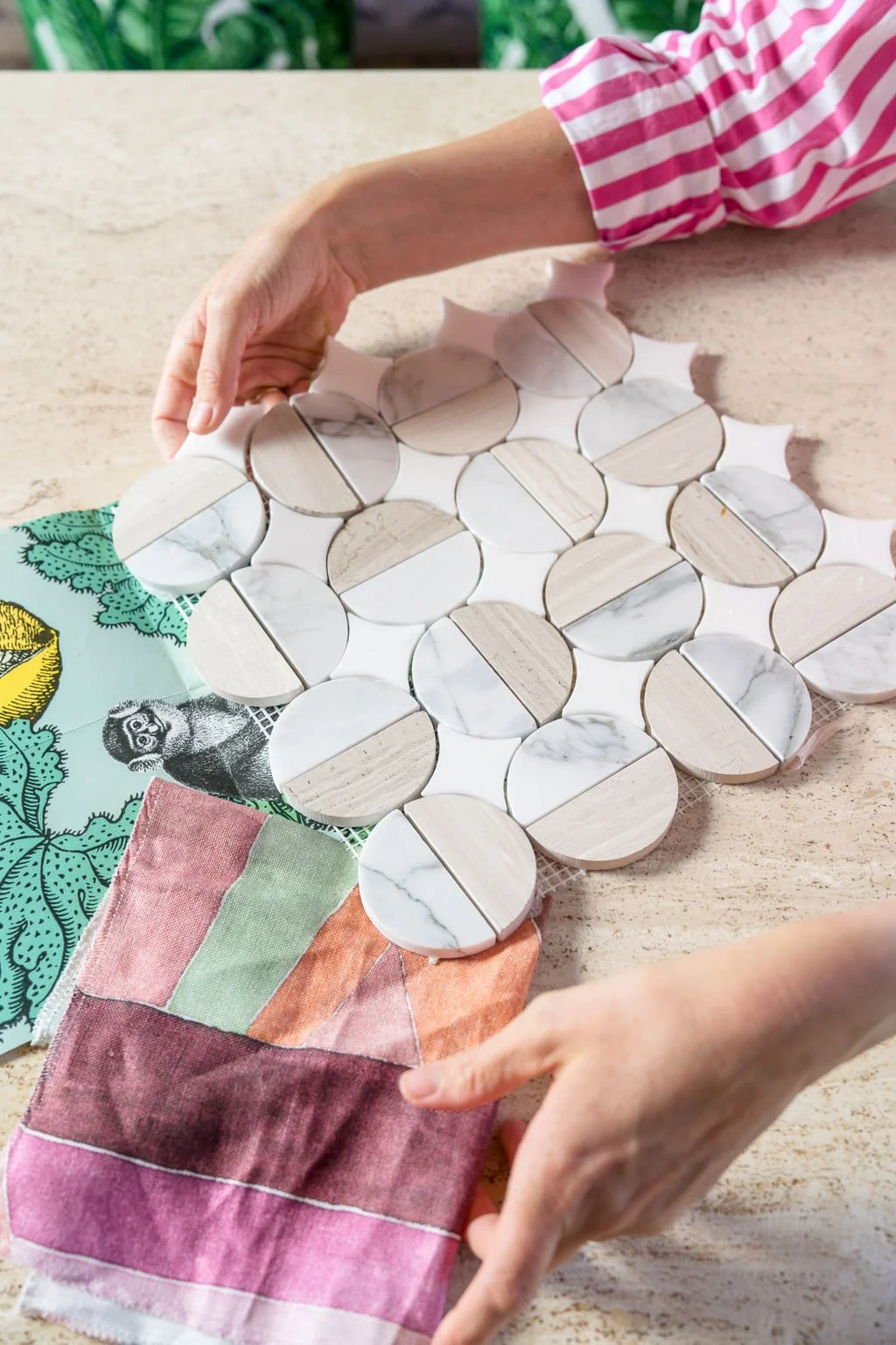
For an interior designer, that might mean photographing you reviewing material samples, sketching, styling a room, walking through a finished project, or simply existing naturally within a space that reflects your design point of view.
A strong collection might include:
Editorial portraits
Working and process imagery
Material and sample details
Environmental portraits within a finished project
Candid moments
Horizontal images with room for website copy
Vertical imagery for social media and editorial use
Details that communicate your personality and aesthetic
Together, these images begin to create a more complete visual identity for your studio.


Start With Where the Images Need to Go
Before deciding what to photograph, I think it's more useful to ask:
Where will these photographs actually be used?
Your website may need a strong horizontal portrait for an About page. Instagram might require vertical images. A speaking engagement could require a clean portrait. A publication may want photographs of you working within one of your projects.
Planning around those needs makes the photography considerably more useful.
Instead of leaving a session with twenty variations of essentially the same portrait, you leave with a collection designed to work across your marketing.
That might include imagery for your:
Website
About page, homepage, services pages, blog, and contact page.
Social Media
Instagram posts, Stories, announcements, educational content, and behind-the-scenes storytelling.
Editorial & Press
Designer profiles, interviews, speaking engagements, awards, and publication opportunities.
Marketing
Newsletters, presentations, proposals, media kits, and other brand materials.
The goal isn't simply to create more photographs.
It's to create the right photographs for the places your business needs them.
Photographing a Designer Within Their Own Work
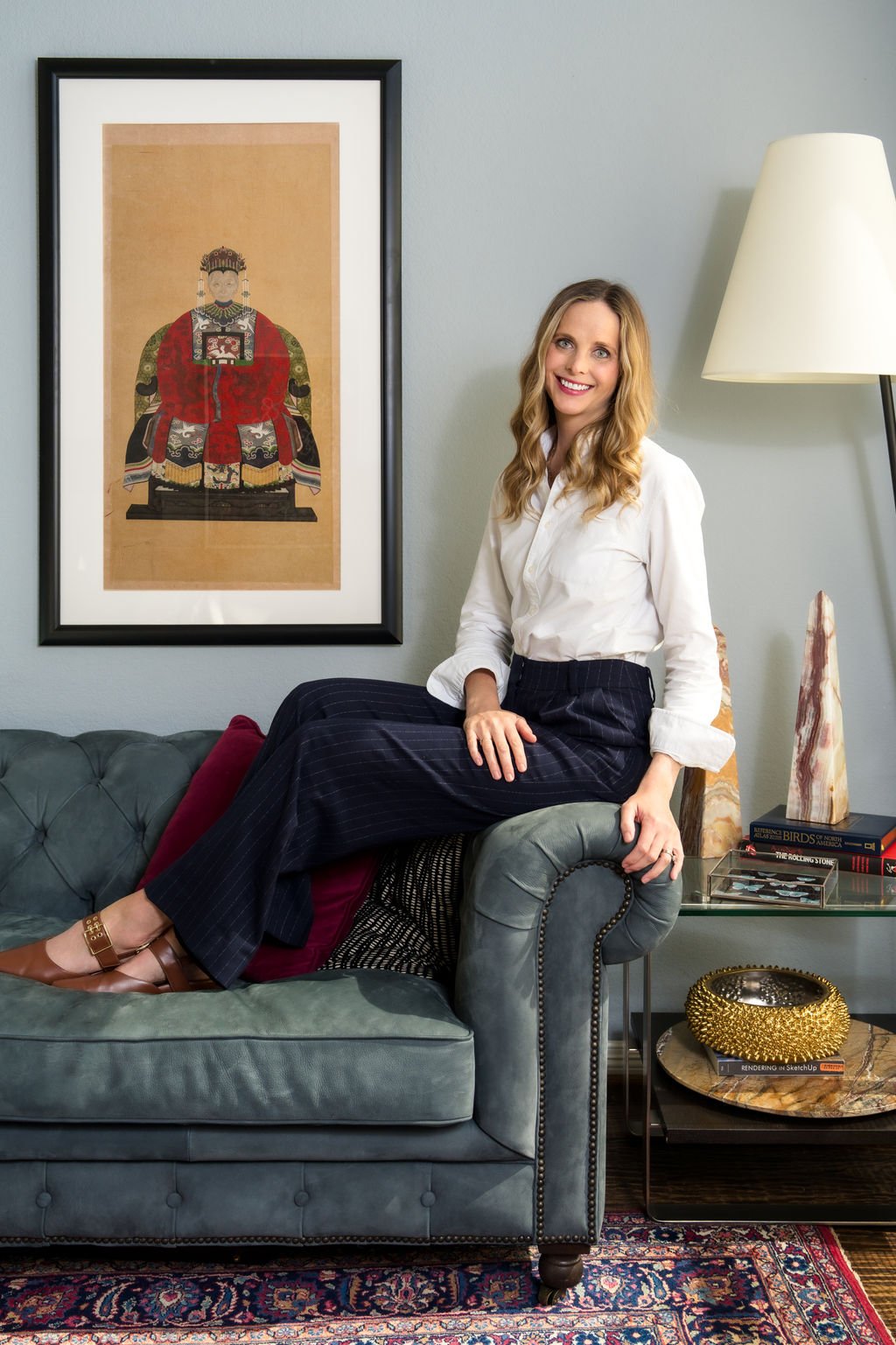
One of my favorite approaches is photographing an interior designer inside a completed project.
It immediately gives the portrait context.
Instead of placing someone against an arbitrary backdrop, the environment becomes part of the story. The materials, colors, artwork, furniture, and architectural details surrounding the designer communicate something about their point of view before they've said a word.
That was especially true when photographing Chelsea Dunn of Chelsea Dunn Design.
Chelsea's work is known for confident combinations of color, pattern, materials, and deeply personal details. Photographing her within one of her projects allowed us to create portraits that felt connected to the work itself rather than separate from it.
The interior became part of her visual identity.
Show the Process, Not Just the Portrait
Some of the most useful photographs from a personal brand session may not look like traditional brand photographs at all.
A designer sketching.
Hands arranging material samples.
A quiet moment styling a table.
Reviewing a detail within a finished room.
These images give potential clients a glimpse into the creative process behind the finished spaces they see in your portfolio.
They also create valuable supporting imagery for websites, newsletters, blog posts, and social media where another straightforward portrait may not make sense.
This is where brand photography becomes less about "having photos of yourself" and more about visually documenting how you think and work.
Wardrobe Should Support the Story
You don't necessarily need three outfits or an elaborate wardrobe plan.
What matters more is choosing clothing that feels recognizable as you while working visually with the environment we're photographing.
For designers especially, wardrobe becomes another layer of the composition. Color, silhouette, texture, and pattern can either complement the room or compete with it.
That's why wardrobe, location, compositions, and intended image use are best considered together before the session rather than independently on shoot day.


Create Variety Without Creating More for the Sake of More
A useful brand collection needs variety, but variety doesn't have to mean dozens of unrelated setups.
One location can often produce a surprisingly diverse collection.
A wide environmental portrait can establish the designer within the room. A tighter portrait creates something more personal. Process photographs tell the story of the work. Details and hands create supporting imagery. Horizontal and vertical compositions make the collection adaptable across different platforms.
The result is a cohesive visual library rather than a collection of disconnected photographs.
And because everything was created within the same visual world, the images feel consistent wherever they appear.
Personal Brand Photography Should Still Feel Like Your Brand
Ultimately, your brand photography shouldn't feel like you've stepped into someone else's idea of what an interior designer is supposed to look like.
It should feel connected to the work you've already built.
The spaces you design.
The materials you're drawn to.
The way you work.
The personality clients experience when they meet you.
When those elements come together, personal brand photography becomes more than a set of portraits. It becomes another layer of the visual story you're already telling through your portfolio.
Related Articles
Photography Insight: Why Professional Interior Photography Matters
Resource: How to Use Your Photos Across Your Website, Social Media & Marketing
Meet the Designer: Chelsea Dunn Design
Follow Along on Instagram
Recent projects, behind-the-scenes moments, and a closer look at the spaces, details, and designers I have the opportunity to photograph.
Ready to Plan Your Next Photography Project?
Thoughtful photography begins long before shoot day. Creative Production Planning helps us determine what needs to be photographed, how the imagery will be used, and which compositions will create the strongest collection for your portfolio and marketing.